

By Manjeet Dhakal
Just last weekend, I was travelling with my family through some of the mountain communities that have now been devastated by the catastrophic floods in northern Nepal.
These are places only a few hours from Kathmandu - communities, roads, energy infrastructure and landscapes that were part of an ordinary journey just days ago.
To see the scale of destruction now is deeply emotional. But beyond the immediate tragedy, this disaster raises difficult questions about what is happening in the Himalayas, how climate change is altering mountain risks, and whether countries like Nepal have the resources to prepare for what lies ahead.
Understanding what happened
The scientific picture is still evolving, however, what is becoming clearer, however, is that the event initially identified as an earthquake was not a conventional tectonic earthquake.
The seismic signal was generated by a massive collapse of glaciers, ice and rock. Satellite observations indicate that a large section broke away at high altitude and descended rapidly into the valley.
Emerging scientific reconstruction suggests an even more complex sequence. Rather than a conventional glacial lake outburst flood, the disaster appears to have involved a combination of rock and ice collapse, frictional melting, permafrost thaws, monsoon-swollen rivers and other inflows, creating a cascading flood that travelled rapidly downstream.
This distinction matters. Mountain disasters do not necessarily have a single cause. In a rapidly changing climate, we increasingly need to understand cascading risks—where changes in glaciers, permafrost, unstable slopes, rainfall, rivers and exposed communities interact to turn one hazard into a much larger disaster.
The climate connection
Whether this specific glacier collapse can eventually be formally attributed to climate change requires further scientific analysis. Attribution is important, and scientific uncertainty should be communicated clearly. But uncertainty about one event should not obscure what we already know about the broader climate signal.
The Himalayas are warming rapidly. Rising temperatures are accelerating glacier melt and retreat. In high-mountain environments, warming and associated changes in ice support, meltwater and rainfall can weaken slopes and contribute to instability. Thawing permafrost is an additional concern, as permanently frozen ground warms and degrades, the ice that helps bind fractured mountain rock can diminish, potentially contributing to slope instability.
Scientists examining such disasters have cautioned against describing climate change as the sole immediate trigger, while also highlighting warming and glacier melt as likely contributing conditions.
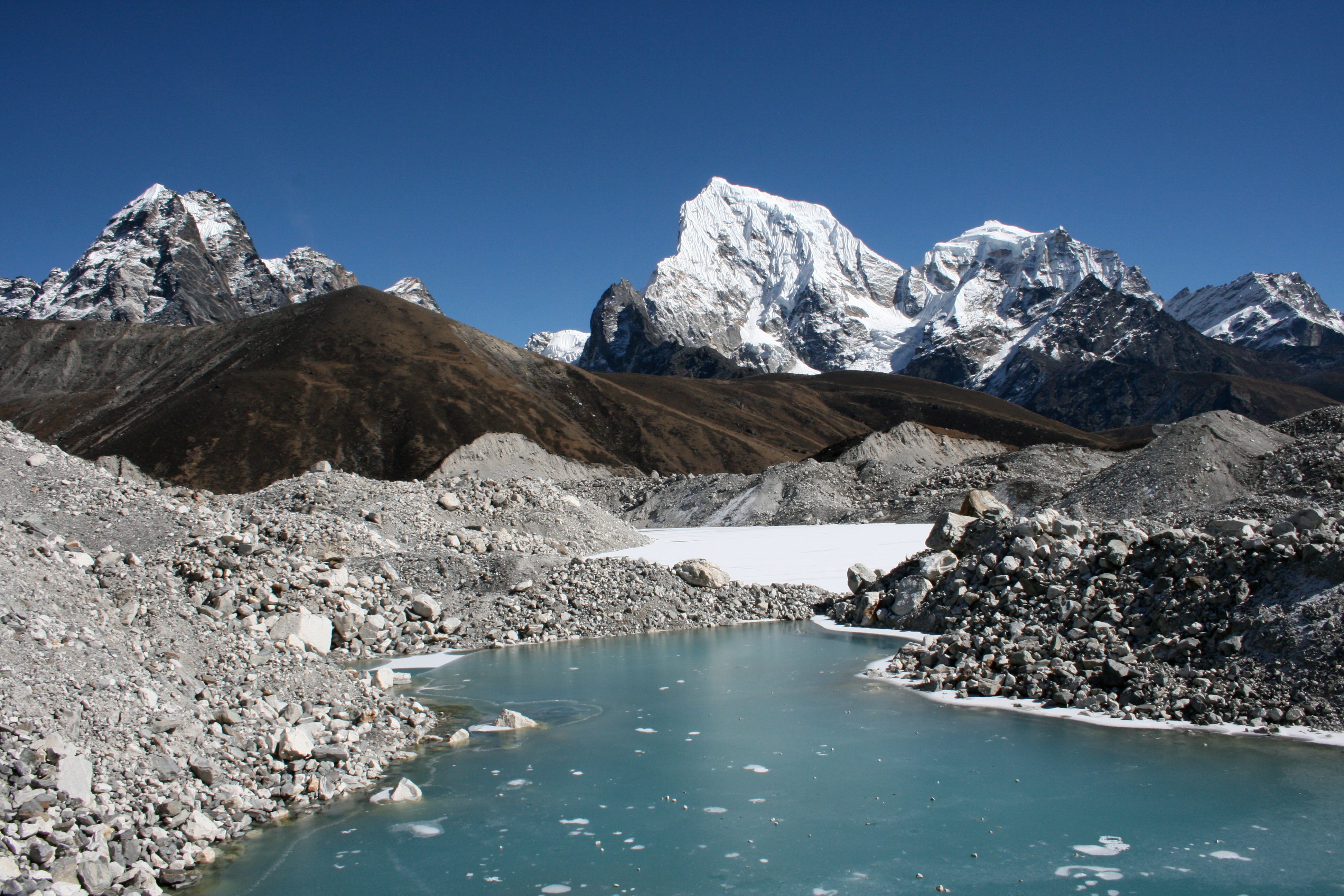
The longer-term evidence is equally concerning. Across Nepal, glaciers are retreating and fragmenting while glacial lakes are expanding. Nepal’s glacier area declined substantially in the last decades, while inventories identify more than 2,300 glacial lakes, hundreds of which are expanding.
Our own recent research on climate-induced loss and damage in Nepal also finds that anthropogenic climate change has already increased the probability and intensity of extreme heat and heavy precipitation across the country’s different physiographic regions.
The message is therefore larger than this single disaster: the baseline conditions of Nepal’s mountains are changing.
A fundamental issue of climate justice
Nepal has contributed very little to the greenhouse gas emissions driving global warming, yet it is increasingly bearing the consequences from glacier retreat and Glacial Lake Outburst Flood (GLOF) to extreme rainfall, floods, landslides, drought and heat.
Each disaster takes lives, damages infrastructure and livelihoods, and diverts scarce development resources towards reconstruction. And preparing for increasingly complex hazards is itself expensive. Monitoring thousands of glaciers and lakes, strengthening hydrometeorological networks, developing multi-hazard early-warning systems and making infrastructure climate-resilient require resources and technologies that vulnerable mountain countries cannot mobilise alone. This is where Loss and Damage becomes a lived reality rather than an abstract negotiating concept.
From Nepal’s mountains to COP31
As someone engaged in the UN climate process and climate negotiations, I also see this disaster through the lens of the discussions heading towards COP31. Events such as this remind us why negotiations on mitigation, adaptation and Loss and Damage ultimately matter: decisions taken in negotiating rooms have consequences for communities confronting climate risks on the ground.
At COP31, mountain risks need greater visibility across these discussions. This means keeping the 1.5C warming target within reach and rapid emissions reductions at the centre of global ambition. It’s clear this requires addressing dependence on fossil fuels—the primary driver of global warming. Those who have benefited most from fossil fuel-driven growth must take greater responsibility for rapid emissions cuts. This requires all major polluters who have not submitted climate plans aligned with 1.5°C to revisit and resubmit their goals. We have to turn down the global heat.
Critically we also need to see a substantial increase in adaptation finance; strengthening access to technologies such as science and early-warning systems; and ensuring that international arrangements for Loss and Damage can respond effectively when vulnerable countries face impacts beyond their capacity to adapt.
The international community has established important mechanisms, including the Santiago Network and the Fund for responding to Loss and Damage. The test now is whether these mechanisms can translate international commitments into timely, accessible and adequate support when countries actually experience loss and damage.
Science, preparedness and regional cooperation
Nepal has made important progress in disaster risk reduction, hydrometeorological monitoring and early warning. But the changing nature of mountain hazards requires us to go further. Climate science, glacier and slope monitoring, hydrology, disaster preparedness and local response systems need to work as an integrated multi-hazard system.
Regional cooperation is equally important. Himalayan rivers, glaciers and hazards do not respect political borders. Real-time data sharing, joint scientific research, transboundary early-warning systems and coordinated emergency preparedness between Nepal, China, India and the wider Himalayan region should become a much stronger priority.
The international community also has a responsibility. Immediate humanitarian support is essential, but global attention cannot disappear when the disaster leaves the headlines. Climate-vulnerable countries need predictable adaptation finance, technology and capacity support, alongside the newly established Loss and Damage fund capable of responding to the scale and urgency of real-world impacts.
Above all, adaptation cannot substitute for mitigation. There are limits to how much we can adapt when glaciers destabilise, mountainsides collapse and entire river systems change.
I saw these mountains and communities just days before this disaster. That makes this deeply personal. But its message is global: we need to understand our rapidly changing mountain systems much better, invest urgently in resilience, strengthen regional and international solidarity and cut global emissions deeply before the risks become even harder to manage.
Manjeet Dhakal is the Lead Advisor to the Chair of the Least Developed Countries (LDC) Group on Climate Change, providing strategic and technical advice, policy analysis and negotiation support to the Chair and LDC Group members.