


By Mike Davis, CEO Global Witness
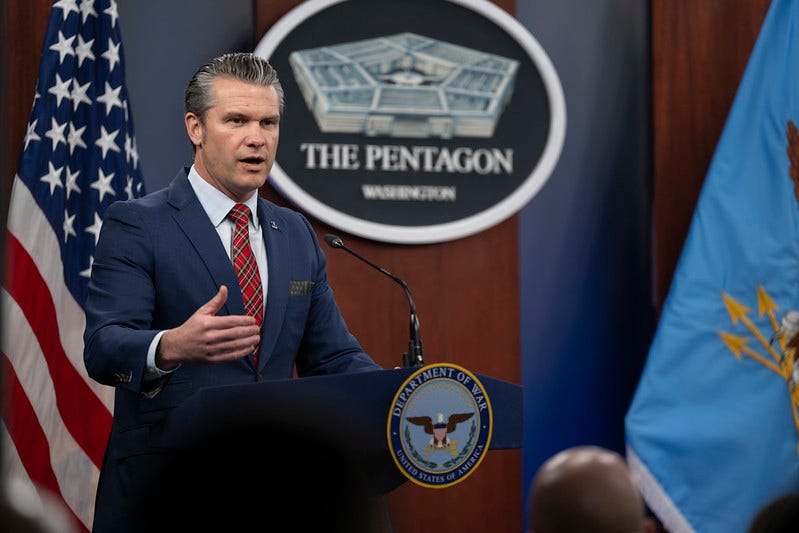
There are many reasons why US President Donald J Trump may have given the green light to bomb Venezuela and kidnap its leader President Nicolás Maduro on 2 Jan. In a press conference on 3 Jan Secretary of State Marco Rubio accused Maduro of being a dictator. Secretary of War Pete Hegseth said it was due to narcotic drug smuggling.
But there are many countries around the world that are ruled by dictators, smuggle drugs and arguably pose a far greater material threat to the US than Venezuela. Few have seen their governments threatened, a US Navy fleet set sail or leaders extracted by Delta Force at the dead of night. North Korea’s Kim Jong Un sleeps easily.
The theme President Trump continually returned in the Jan 3 press conference and an earlier interview with Fox News was oil. He’s right. Venezuela is a sleeping oil superpower - crippled by poor and corrupt governance at home, sanctions abroad. It holds 17% of global oil reserves - that’s 303 billion barrels.
Trump has repeatedly accused Maduro and his country of ‘taking our oil wealth’ while his Treasury Secretary Scott Bessent said ‘if something happens down in Venezuela, that we could really see oil prices go down’ for US consumers. Change in Caracas will see the US take control of the oil fields, Trump said, promising that the wealth extracted would go to Venezuela but also - crucially - to US companies.
Recent history
Some of these companies – namely ExxonMobil, Chevron and ConocoPhillips – have history in Venezuela. In 2007, the firms resisted moves by then President Hugo Chávez to bring his country’s oil operations further under state control, resulting in the oil giants having their assets seized.
After last week’s attack Trump said the seizures were the “largest theft of property in the history of our country” and that “massive oil infrastructure was taken like we were babies, and we didn’t do anything about it”.
As Reuters argues here, the billions required to reboot Venezuela’s oil sector represent a ‘poisoned chalice’ for US oil companies. Equally, for Venezuelans, Exxon, Chevron, and ConocoPhillips are hardly heroes on the horizon. The vast US Gulf coast refineries were built to handle heavy crude such as that produced in Venezuela - with revenues staying in the US.
Set aside the breach of international law, blow to already creaking multilateral order, White House bypassing of Congress, the swatting aside of complaints from European allies. What we are now seeing is the physical and military-backed manifestation of a fossil fuel-driven foreign policy which threatens global energy and climate security.
Oil chokeholds
Saudi Arabia, Russia, Iraq, Nigeria, Libya: much of the world’s oil and gas reserves are concentrated in politically unstable regions, turning them into constant flashpoints. There is a repeated cycle of violence we would do well to acknowledge: from Russia’s war on Ukraine to the latest U.S. attack on Venezuela, control over fossil resources keeps triggering conflict.
Others can and should touch on the fate of the international order and what steps should be taken at the UN. The lesson all leaders who are major fossil fuel importers - and that means most leaders - should draw from this is it is time to accelerate the transition off oil, gas as fast as possible.
Global oil and gas markets are increasingly under the control of a group of countries who care little for global norms and everything for profit. Who will think nothing of using the levers at their disposal to turn the screw to suit their geopolitical ends. Be it the US, Russia or Saudi Arabia and its OPEC club - we are in a world where energy is being weaponised.
The good news is despite what you may have heard, the transition is accelerating. According to the IEA, ‘Globally, renewable power capacity is projected to increase almost 4 600 GW between 2025 and 2030 – double the deployment of the previous five years.’ Wind, solar, battery storage, electric vehicles - these are all a route to sovereignty and security.
Ditch the risk
The alternative does not bear thinking of. It is not hyperbole to say Europe and other major fossil fuel importers could become vassal states to the oil & gas producers - subservient to whoever wields the most military might, at risk of losing power, energy, jobs.
More than 80 countries signalled their support for a global fossil fuel phaseout plan at COP30 last November. This weekend’s events should be a nudge to them all to get to work this January and start drafting emergency plans to implement this. The longer they delay - and the fossil fuel lobbying machine will try and delay - the weaker their strategic positions will be.
“Safety and certainty in oil lie in variety and variety alone,” Winston Churchill told the British Parliament in 1913. A century on, we can tweak his famous quote. The only safety and certainty in oil lies in quitting our addiction, releasing our fossil fuel shackles and embracing a diverse and clean energy transition.
Mike Davis is chief executive of Global Witness